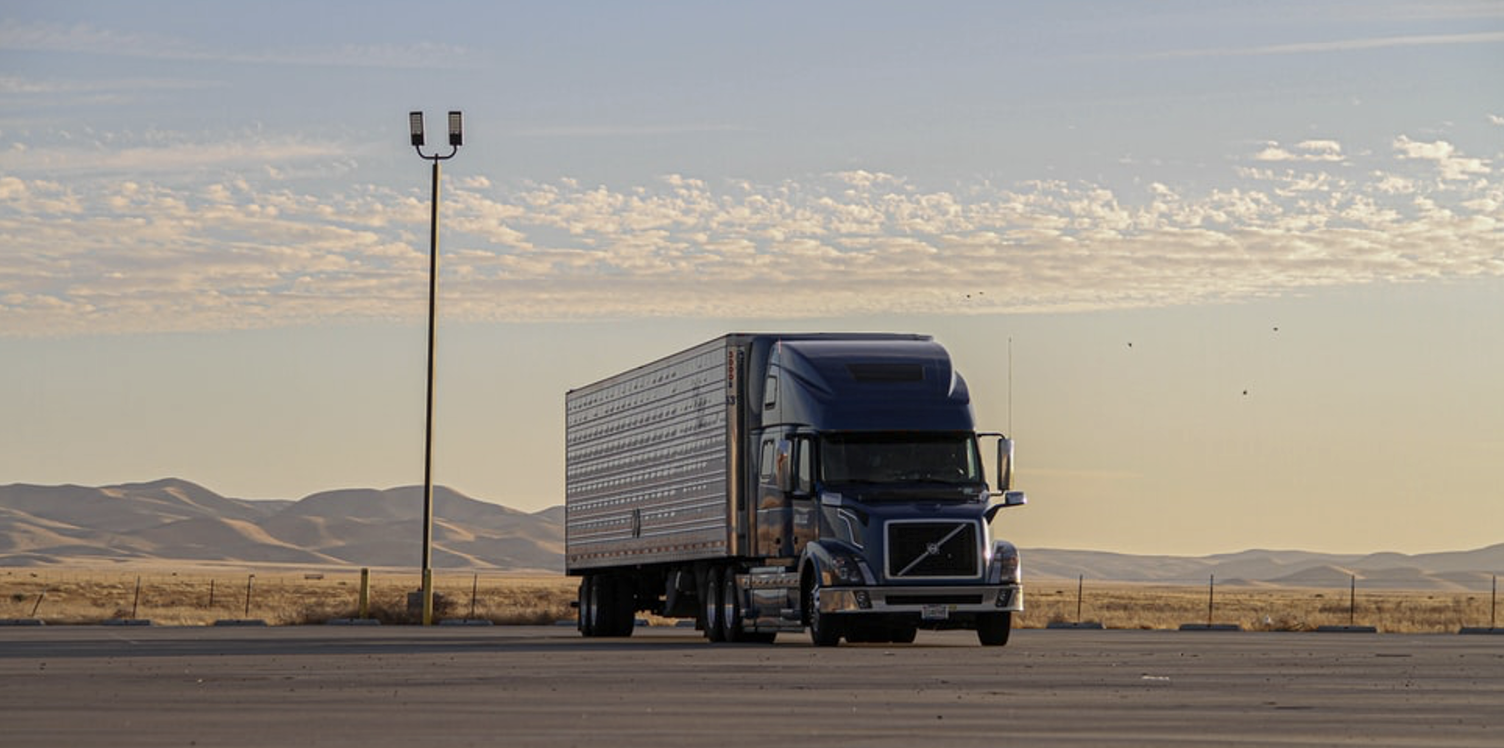
To keep storage costs for production parts under control, building a new car relies heavily on a just-in-time principle. On the European market, this creates several challenges. Trucks carrying production-critical parts can be delayed by traffic jams, or parts may not reach the factory because a supplier cannot produce them on time. All these situations can cause the production line to stop, at an estimated cost of around 1 million euros per minute. Today, the logistics team tries to mitigate these risks by arranging special express trucks or even chartering an airplane.
Before the Freight Tracking System was implemented, multiple teams of logistics controllers manually monitored each individual route. All communication with stakeholders happened via phone and email. To support decision-making, they used a series of Excel files. With this approach, there was no global overview of the current status of all routes and production parts, which made reporting to stakeholders very difficult. In addition, there was no standardized way of working across the logistics controllers.
The Freight Tracking System (FTS) was developed to automatically track more than a thousand different routes and almost one million production parts per month. All relevant data is collected from a large number of parties and centralized within the FTS.
Given the operational scope of FTS in the European market and the massive amount of data that needs to be processed daily, a CQRS architecture was chosen. By using the AXON framework on top of a Heroku stack, we were able to process all incoming events in a timely manner.
User permissions are critical within the Freight Tracking System. Several roles were defined, as not all users are allowed to access the same information. A hierarchical approval flow was also implemented to ensure that the right roles can initiate the appropriate mitigating actions.
Geofencing was set up within FTS so that the exact location of each transport is continuously determined via GPS signals. This gives TME constant insight into the status of all production parts.
The Freight Tracking System is an internal TME application without any public-facing functionality and was designed for single-browser use. Our contribution included both building the complete application and transferring knowledge to the internal TME team.
The role of Refleqt’s consultants in this project was twofold:
Functional analysis
Refleqt provided the functional lead, who was responsible for clarifying the various requirements through iterative workshops with the TME business owner. Within the agile Scrum setup, the functional lead acted as a proxy product owner towards the development team, while also translating business needs and priorities with the stakeholders.
From the outset, the team decided to use a Behavior-Driven Development (BDD) approach. During analysis, acceptance criteria were defined as concrete scenarios that could later be reused directly in the validation process.
Non-clickable wireframes were also created so that TME could see a clear representation of the application and its interactive UI before development.
Test automation
Functional testing
We created a suite of automated validation scripts at API level to verify the system’s requirements.
Because the platform is event-based and eventually consistent, tests had to be adapted so they would not fail when newly created data was not immediately available. Using dedicated frameworks, we implemented a polling-based validation mechanism to handle this reliably.
Front-end testing
The front end was validated manually only, as the application does not contain any customer-facing functionality.
Performance testing
The Freight Tracking System was validated under expected production load (>1,000 different routes and millions of production parts). A dedicated load test confirmed whether the system could continue to perform under this load within TME’s environment.
Tools & technologies
- Test automation: Java, Cucumber, Swagger & Swagger Codegen, Maven, JUnit, Awaitility
- Performance: JMeter
- Project support: Jira, Confluence, Bamboo
The Freight Tracking System was delivered with a strong focus on quality. All potential anomalies that can occur in the logistics process can now be detected and handled. A predefined set of mitigation actions is available and can be executed efficiently, always respecting configured access rights and user roles. All functionalities defined during the analysis phase work as intended, and the system can handle the expected load on the platform.
In practice, using the Freight Tracking System enables optimization of the supply chain and significantly reduces the impact on production.